


BOTTESINI | Allegro di Concerto (also known as "alla Mendelssohn" | DOUBLE BASS AND PIANO
FILE FORMAT: PDF | 600 dpi | 55 pages
RELEASE: final, Urtext edition
SCORES: double bass part and two piano scores
EXTRAS: this release includes performance practice hints
KEY SIGNATURE (piano): in E minor (original) | in D minor (transposed, for performance with double bass in orchestra tuning)
SOURCE: composer's facsimile, autograph of the piano score in E minor, unamended
COMMENT: As a soloist, Bottesini often employed a scordatura on the double bass that was tuned higher than the tuning commonly used in orchestras. Because concert pitch had not yet been standardized in the 19th century, a variety of pitch levels coexisted. In addition to the frequently used pitch of A ≈ 435–440 Hz, the older Baroque pitch of A ≈ 415 Hz remained also widespread. This resulted in a difference of almost exactly a semitone. British practice, particularly in large concert settings, remained at notably higher pitch longer into the century, contributing to a brighter and more brilliant sound. For this reason, the accompaniments to many of Bottesini’s compositions exist in two versions: one at the notated pitch, and another transposed a semitone higher, the latter intended for use with lower-pitched keyboard instruments or orchestras. For the same reason many old editions include organ parts in two different pitches because organs were tuned to a different, fixed pitch than orchestral instruments, requiring transposed notation so they could play together. There is also a theory suggesting that Bottesini tuned his instrument to different pitch levels; however, there is no historical evidence for that. Bottesini often wrote stronger dynamics and clearer articulations for lower-pitched instruments - whose sound is naturally softer - to balance the difference.
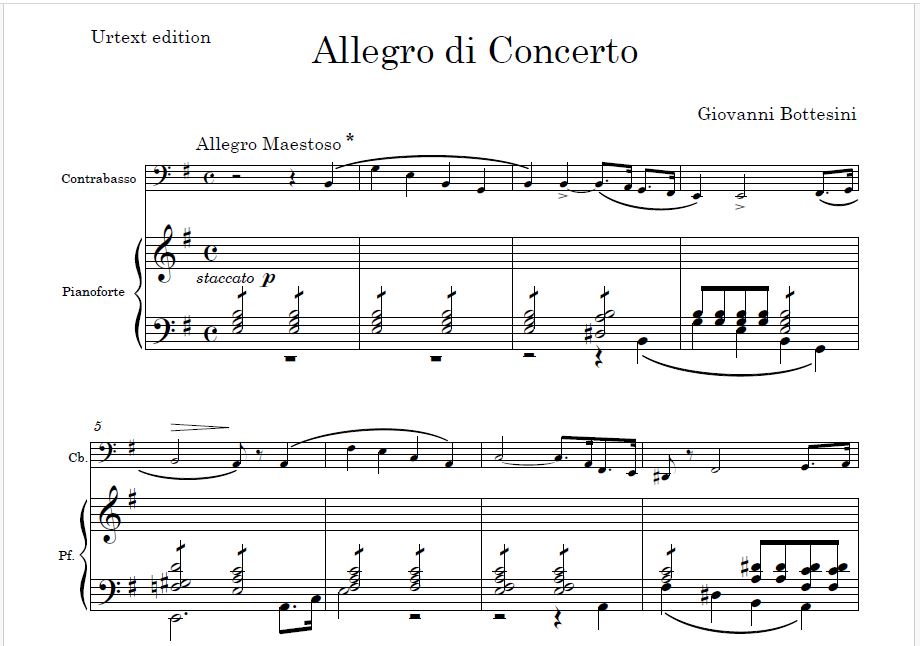
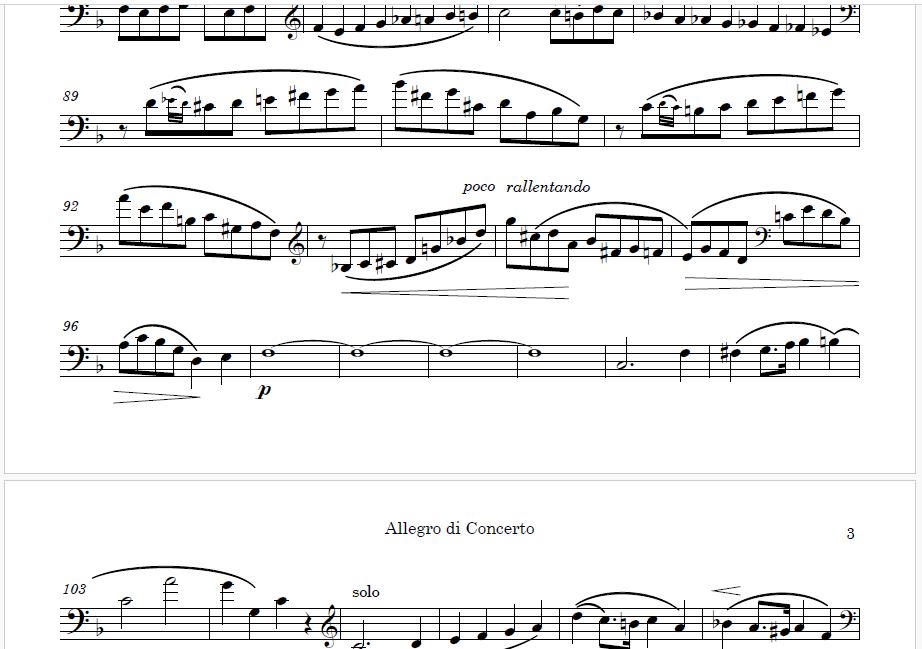
This autograph version differs in several details from the other autograph. It includes intentionally varied harmonies, and, for example, the double bass part contains an extended low G, similar to bars 131–138 of the first movement of Mendelssohn’s Violin Concerto—a work that clearly served as a model and inspiration for Bottesini in this composition (see second screenshot, from bar 97). Although no historical documents (such as correspondence) provide precise information about the date of composition, it is highly likely that the work was written not long after the death of Felix Mendelssohn Bartholdy in 1847, at the age of thirty-eight. Further support for this assumption comes from Bottesini’s annotation “No. 6” on the autograph which would indicate that the work was composed around 1850. “Grand Duo Concertante,” in its later, better-known version for violin and double bass (some autographs are marked “No. 5”) contains in the violin part also passages evidently inspired by Mendelssohn’s material in the second movement of the Violin Concerto, Op. 64, bars 55–57 and 59–72.
*12 EUR | Buy now:

*only for the EU- and UK-residents: the customers will be additionally charged with a VAT on e-services during the checkout process. After your confirmation of the country of your residence, your respective country will automatically add VAT in its common VAT-rate. The electronic items like scores in PDF format are also affected by this rule, which is applied since 2015.